wellness
Sleep Scientists Reveal Why Your Pre-Bed Hour Matters Most
Researchers say the hour before bed matters more than the eight hours that follow, and Montparnasse's wellness community is paying close attention.
How we reported this
The average adult in a dense urban neighbourhood takes 27 minutes to fall asleep, nearly double the 14-minute benchmark sleep scientists consider healthy. That gap, researchers at the Institut National du Sommeil et de la Vigilance have tracked for over a decade, is almost entirely explained not by what happens in bed, but by what happens in the 90 minutes before it.
The science of wind-down has moved fast. A 2024 meta-analysis published in Sleep Medicine Reviews examined 63 studies covering more than 18,000 participants and found that structured pre-sleep routines cut sleep-onset time by an average of 39 percent and reduced night-waking episodes significantly. Hormone research, much of it focused on the role of melatonin and cortisol interplay, has added detail to what those routines should actually contain. The upshot: the brain needs cues, not just darkness.
In Montparnasse, that message is landing. The neighbourhood's wellness culture, concentrated along the Rue de la Gaîté corridor and around the gardens at the Parc Montsouris, has always leaned toward the contemplative end of the spectrum. But in the past 18 months, sleep has become a specific focus rather than a byproduct of general health habits.
What the Science Actually Recommends
Three interventions have the strongest evidence behind them. The first is temperature: core body temperature needs to drop roughly 1°C to initiate sleep, and a warm bath or shower taken 60 to 90 minutes before bed accelerates that drop through vasodilation. Second is light. Blue-wavelength light from screens suppresses melatonin production for up to two hours after exposure, a biological fact that no blue-light filter fully corrects for. Third is cognitive offloading: a 2018 study from Baylor University found that writing a to-do list for the next day, not a journal of past events, specifically a forward-looking task list, reduced sleep-onset time by an average of nine minutes. Small, precise, repeatable.
Breathing protocols have also gained traction. The 4-7-8 technique, popularised by Dr Andrew Weil and now embedded in clinical relaxation programmes across Europe, involves inhaling for four counts, holding for seven, exhaling for eight. Cardiac coherence breathing, five seconds in, five seconds out, sustained for five minutes, is used in stress-reduction programmes at the Centre Médical Europe on Rue d'Amsterdam, which introduced a dedicated sleep consultation service in January 2026 at €65 per session.
Montparnasse's Own Wind-Down Infrastructure
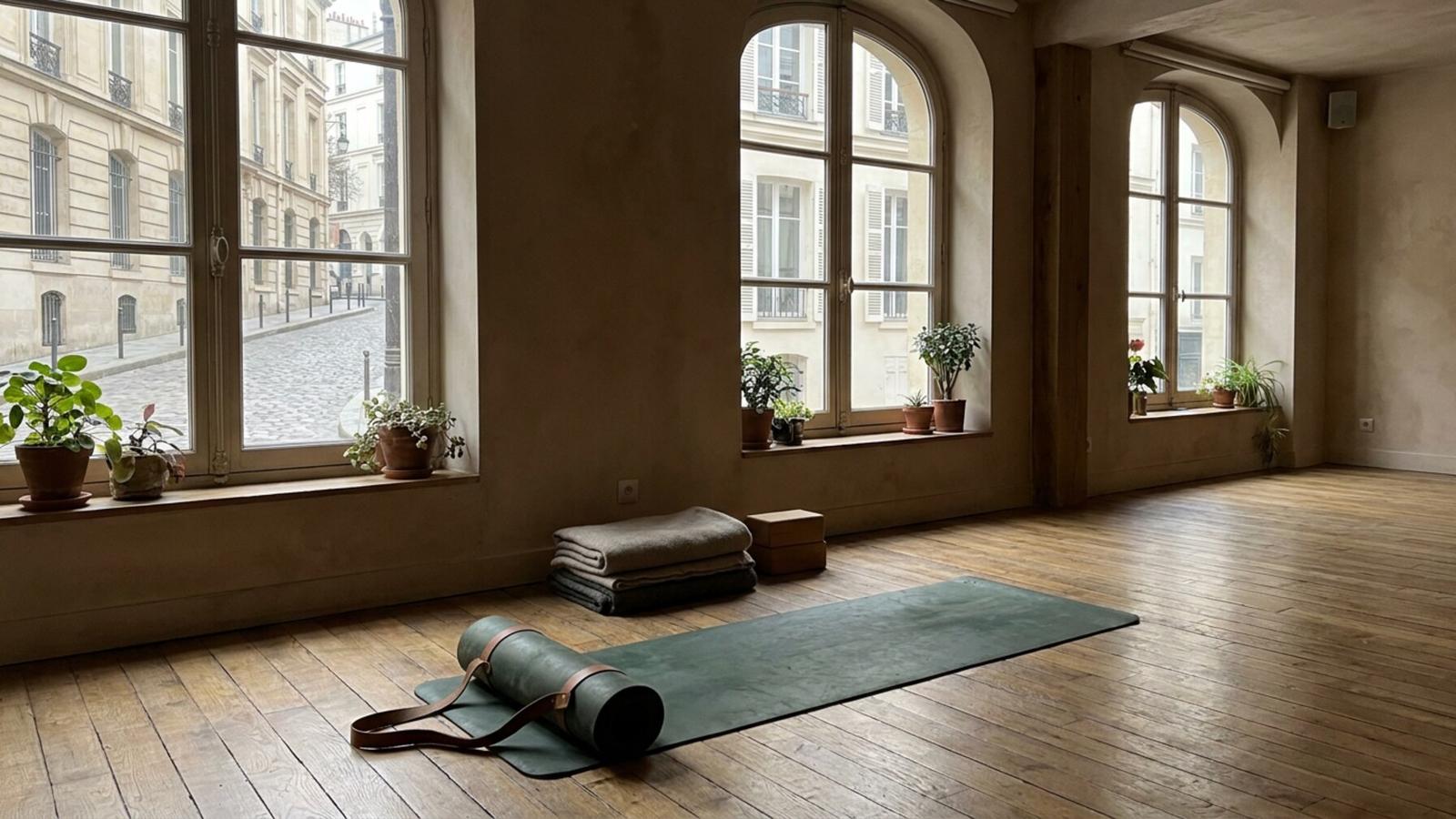
The Studio Yoga Montparnasse on Boulevard Edgar-Quinet has run a Thursday evening Nidra class, yoga nidra being a guided body-scan technique that mimics the hypnagogic state preceding sleep, since September 2024. Attendance has grown from 8 participants per session to a waiting list of 22. Across the 14th arrondissement, the Médiathèque Marguerite Yourcenar now stocks a curated sleep-science shelf, added in March 2026, that includes French-language editions of Matthew Walker's Why We Sleep and Inserm-published guidance on circadian rhythm management.
The Parc Montsouris itself functions as informal wind-down infrastructure. The park's southern paths, lit softly after dusk with low-lux amber fixtures installed during the 2023 renovation, attract a consistent evening-walk crowd. Amber light at low intensity does not measurably suppress melatonin, a detail the 14th arrondissement's urban planning team cited when selecting the fixture specification. It was not an accident.
For anyone looking to structure a personal routine, sleep researchers suggest working backward from a fixed wake time and anchoring a 90-minute wind-down block to that. No screens from the 60-minute mark. A warm shower at the 80-minute mark. The to-do list written at a desk, never in bed, at the 70-minute mark. Bed reserved for sleep only, not reading, not scrolling. These are not tips. They are the behavioural components that clinical sleep medicine has tested and retested across populations for twenty years.
A local médecin généraliste or a sleep specialist at the Hôpital Sainte-Anne, which runs one of Paris's few dedicated sleep disorder clinics on Rue Cabanis, can provide personalised assessment if persistent insomnia is the concern. The science is useful. A consultation is better.